
La Pavoni
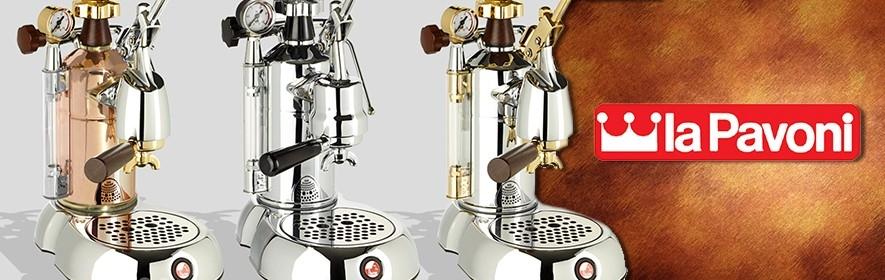
Welcome to 1st in Coffee, your 1st place to shop for Italian La Pavoni espresso machines. Beginning in Italy in 1905, La Pavoni craftsmen have built each lever espresso machine by hand using only the top quality materials and are considered one of the top commercial espresso machine brands. Highly polished chrome and brass finishes accent the elegant and efficient designs. Check out the popular Europiccola and Stradivari models among others and begin enjoying these world class espresso machines, built in Italy, the home of espresso coffee. Order La Pavoni espresso machines securely on-line, or call 7 days a week to learn more about commercial espresso machine brands.

Since their founding by Desiderio Pavoni in Milan in 1905, La Pavoni has been the standard in commercial espresso machine brands. The craftsmen build each La Pavoni espresso machine by hand using only top quality materials, including highly polished chrome and brass finishes that accent the elegant and efficient designs. La Pavoni espresso users are classic purists who appreciate the art of espresso and the experience that only a lever espresso machine can give you. These machines take you back to the beginning of espresso history, to how it was originally made, before electricity and steam automated the process. Without pumps and electronic parts, these machines produce espresso in an authentic and traditional method.
While coffee today has gone automated and mainstream, the beauty of the arm levered espresso machine is a true coffee lover’s dream made real with a La Pavoni espresso machine. With one of these machines, you get the personal experience of being involved with every single step of the espresso process. You can finely tune your espresso through grinding the beans, regulating the temperature and steam pressure, grinding and tamping, and then forcing the water through the ground beans using your own arm strength. While it may take some practice to perfect the art of espresso making, having the ability to tailor your own espresso drink yourself is a luxury that La Pavoni takes seriously as one of the best commercial espresso machine brands.
The La Pavoni espresso machine with lever is a design icon that was created in the 1950s. Since then, there has been little change to the overall design. These machines are built to be beautiful, dependable, and functional. Today, La Pavoni has a few different models of their lever espresso machines, but the differences are minimal. These machines come in two sizes: 8 cups and 16 cups. The 16 cup variation has a pressure gauge included, while the 8 cup does not. All other differences in the models are basically cosmetic making them distinct among commercial espresso machine brands.
The La Pavoni Professional is a 16 cup elegant lever espresso machine that is just as much a work of art as it is a coffee machine. The striking machine is both beautiful and functional, with models in chrome, copper, and gold as stylized from one of Italy's commercial espresso machine brands. It features a 38-ounce boiler, dual frothing systems, a mounted pressure gauge, an internal thermostat, and a millennium brew group that contains heat diffusers to control unwanted heat buildup.
Another striking machine, the La Pavoni Europiccola is a highly efficient 8 cup machine with a polished chrome finish. The Europiccola is designed to be unbreakable and last you for several years. This classic espresso machine features a 20-ounce boiler, a millennium brew group, a piston operated steam pressure, an internal thermostat, and a dual frothing system.
If you want pure simplicity in a sophisticated and reliable machine, then look no further than La Pavoni among commercial espresso machine brands. These machines are as beautiful as they are practical, and won’t disappoint for a traditional Italian espresso. At 1st in Coffee, we promise to help you find the most appropriate La Pavoni espresso maker from our wide selection to fit all your wants and needs. Call us today and let us help you discover the wonderful world of the hands-on, homemade espresso.